Spring
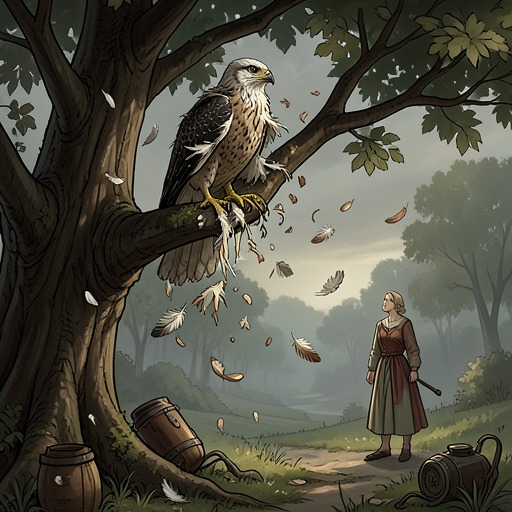
H is for HawkSpring is a turning point in Helen Macdonald’s relationship with Mabel the goshawk: the season brings the bird toward moult and new feathers, but also makes her harder to hold close. Its promise of warmth and renewal is inseparable from Helen’s knowledge that she will soon have to leave Mabel behind for months.
Signs of the Turning Season
Helen notices spring in small, concrete changes: a bluebottle in the garden, purple crocuses lying torpid on the lawn, cherry blossom falling outside St John’s, and blackbirds rising from perches on the city’s gables and Gothic spires. The signs ordinarily bring her joy, along with the air’s bluish tint and the lengthening days. This year, however, she avoids attending to them. Spring means that Mabel will moult in an aviary, beyond Helen’s daily company, and the thought hurts enough that she tries not to think about the season at all.
Warm Air and Mabel’s Flight
The seasonal change also enters the account through Mabel’s behaviour. During a flight in the old field, she pursues a rabbit only half-heartedly, takes time to return, then courses another rabbit and continues away into chestnut trees. Helen recognizes too late that Mabel’s attention has shifted from her. The hawk settles high above a road amid passing cars, trucks, and tractors, then crosses into woodland and remains out of reach despite Helen’s glove and whistle. Mabel fluffs her tummy and shakes her tail, signs of contentment that, in this inaccessible perch, deepen Helen’s fear that the bird is no longer attending to her calls. When Mabel slips away beyond the wood, the flight becomes a practical consequence of Helen’s missed warning signs, not simply a display of seasonal energy.
Moult, Renewal, and Separation
On 27 February, Helen is already preparing for the change that spring will bring. The next day she plans to drive Mabel to a friend’s house, where a spare aviary will give her a place to moult. Mabel must drop her feathers and grow new ones; to support that process, Helen has been feeding her as much quail and pheasant as she can eat. The well-fed bird has become round, but Helen’s expectation that a fat goshawk must turn wild proves false: Mabel is less tolerant of strangers yet remains tame with Helen. Their familiar closeness persists in small domestic rituals—playing catch with paper balls, and Mabel snoozing on Helen’s fist while she watches television—just as the departure approaches.
The Season’s Double Meaning
Spring therefore holds renewal and loss in the same image. For Mabel, it is a bodily cycle of feather loss and growth, accompanied by warmer air and a widening impulse to fly; for Helen, it marks the months in which she will not see her. The contrast between the season’s ordinary beauty and Helen’s effort to ignore it makes the coming separation feel present before it happens. Spring does not resolve their attachment: it gives that attachment a deadline.